Tuesday, October 15, 2013

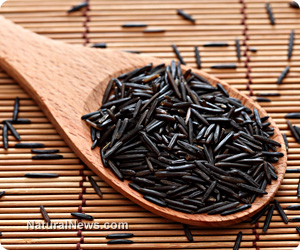
Black rice nutritious facts

riceBlack rice is currently one of the healthiest food types that can be obtained today. Packed with a wide array of nutrients, black rice has a very rich and interesting history. As most people know, rice is a base food source in Asia. During the years when China was ruled by an emperor, black rice was dubbed as the "Forbidden Rice". It was cultivated in very small amounts because it was only for the emperor's consumption. Although no such ban is being practiced nowadays, black rice is still very much produced in low amounts, especially when compared to brown and white rice


Learn more: http://www.naturalnews.com/039806_black_rice_antioxidants_health_benefits.html#ixzz2hoSsz5Is

Black rice: Rare yet highly nutritious

What is organic farming?

A bundle of carrotsPut simply, organic farming is an agricultural system that seeks to provide you, the consumer, with fresh, tasty and authentic food while respecting natural life-cycle systems.

Principles

To achieve this, organic farming relies on a number of objectives and principles, as well as common practices designed to minimise the human impact on the environment, while ensuring the agricultural system operates as naturally as possible.
Typical organic farming practices include:
  • Wide crop rotation as a prerequisite for an efficient use of on-site resources
  • Very strict limits on chemical synthetic pesticide and synthetic fertiliser use, livestock antibiotics, food additives and processing aids and other inputs
  • Absolute prohibition of the use of genetically modified organisms
  • Taking advantage of on-site resources, such as livestock manure for fertiliser or feed produced on the farm
  • Choosing plant and animal species that are resistant to disease and adapted to local conditions
  • Raising livestock in free-range, open-air systems and providing them with organic feed
  • Using animal husbandry practices appropriate to different livestock species

Supply chain

But organic farming is also part of a larger supply chain, which encompasses food processing, distribution and retailing sectors and, ultimately, you. Each link in this supply chain is designed to play an important role in delivering the benefits associated with organic food production across a wide range of areas detailed elsewhere on this website, including:
So every time you buy an organic apple from your local supermarket, or choose a wine made from organic grapes from the menu at your favourite restaurant, you can be sure they were produced according to strict rules aimed at respecting the environment and animals.

Monday, July 1, 2013

How To Plant Guyabano

Soil and climate requirements. The plant grows in any kind of soil, but a fairly deep, friable soil of volcanic origin is conducive to growth and fruiting. It thrives very well from sea level up to 500 meters above sea level. It is best to plant them at the start of the rainy season.
guyabano with unyangMethod of propagation are thru:
1) grafting
2) cuttings
3) marcotting
4) and budding
Planting distance should be three to four meters apart. Can be harvested after two to three years with an expected yield of 3.7 ton per hectare.
Fertilizer Application
Planting Time. Use 250-300 gms. Complete fert. (14-14-14) or (12-24-12). Apply 3 inches below the roots and 5 inches to side  of seeding at planting. Eight cm below roots and 10 cm to the side.
Young trees (1-3 years). Use 300-500 g of complete fert. (14-14-14) or (12-24-12) plus 200-300 g urea (45-0-0). Mix and apply in two equal doses by digging along periphery of the tree. First application – start of the rainy season. Second application – end rainy season.
Fruit Bearing Trees. Use 1.5-3.0 kg complete fertilizer plus 200-300 g  Muriate of potash (0-0-60). Apply as above.
Harvesting
Fruits are mature when they become dark and shiny green with re-curved spines set far apart and the skin appearing to burst with pressure from within. Ripe fruits are light yellow and soft.
information was source from da.gov.ph

Monday, October 15, 2012

What is Organic Farming in Europe?


Organic farming is the form of agriculture that relies on techniques such as crop rotation, green manure, compost and biological pest control. Organic farming uses fertilizers and pesticides but excludes or strictly limits the use of manufactured (synthetic) fertilizers,pesticides (which include herbicides, insecticides and fungicides), plant growth regulators such as hormones, livestock antibiotics,food additives, genetically modified organisms,[1] human sewage sludge, and nanomaterials.[2]
Organic agricultural methods are internationally regulated and legally enforced by many nations, based in large part on the standards set by the International Federation of Organic Agriculture Movements (IFOAM), an international umbrella organization for organic farming organizations established in 1972.[3] IFOAM defines the overarching goal of organic farming as:
"Organic agriculture is a production system that sustains the health of soils, ecosystems and people. It relies on ecological processes, biodiversity and cycles adapted to local conditions, rather than the use of inputs with adverse effects. Organic agriculture combines tradition, innovation and science to benefit the shared environment and promote fair relationships and a good quality of life for all involved..."
Since 1990, the market for organic products has grown from next to nothing statistically, reaching $55 billion in 2009 according to Organic Monitor (www.organicmonitor.com). This demand has driven a similar increase in organically managed farmland which has grown over the past decade at a compounding rate of 8.9% per annum.[5] Approximately 37,000,000 hectares (91,000,000 acres) worldwide are now farmed organically, representing approximately 0.9 percent of total world farmland (2009) (see Willer/Kilcher 2011).
Source: http://en.wikipedia.org/

Thursday, June 14, 2012

Kale Seeds - Buy Kale Seeds Online

History

Kale comes under the cabbage family and is scientifically known as Brassica oleracea var Acephala, which had its origin in Asia. It’s a green leafy vegetable that can be found in the mid of the winter and early spring season. It matures in a total span of 60 to 63 days. This versatile vegetable features attractive long and curly green blue leaves with a large flower head.

Purpose/Use

It’s delicious, nutritious and health promoting, indeed. For various unsurpassed health benefits, this food is recommended by many. It is notably good in many B complex groups of vitamins and helps you to build up a strong immune system against infectious diseases.

Features & Benefits

Its delightful taste will pursue you to cook it in a variety of savoury dishes. It also serves like an excellent salad choice. Also, the flavonoids contained in this vegetable make it a good agent for anti inflammatory and antioxidant benefits for your health. It’s rich in omega 3 fatty acids and vitamin K which helps in limiting neuronal damages in brain. It is also considered to be an excellent diet for the Alzheimer patients.

 Search:

Kale Seeds - Buy Kale Seeds Online